
Net Drift — Premium Calls & Puts
1. Introduction
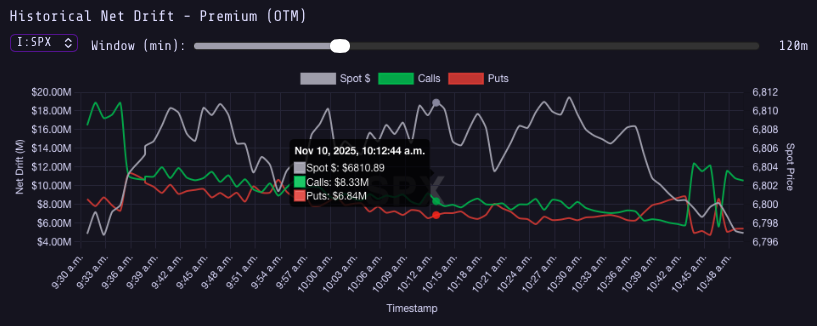
Historical Net Drift measures how option premiums evolve over time and weighted by Open Interest. By analyzing out-of-the-money (OTM) calls and puts, traders can estimate how consistently option sellers or buyers profit from premium decay or volatility events.
It’s a quantitative view of premium bias — whether the market systematically overprices risk on one side (calls or puts).
2. Application
2.1. Historical Patterns
- OTM Puts often have negative drift because volatility spikes disproportionately affect downside protection.
- OTM Calls tend to have small or neutral drift in indices due to mean-reverting markets.
- In equity indices (like SPX), long-term studies show put premiums are overpriced on average — a result of constant demand for tail-risk protection.
2.2. Strategy Implications
Understanding net drift helps design systematic strategies:
- Positive drift → Favor short volatility setups (credit spreads, iron condors).
- Negative drift → Favor long volatility setups (long puts, straddles).
- Monitoring premium decay curves around events (FOMC, CPI) helps identify temporary distortions in pricing.
3. Key Takeaways
- Historical Net Drift weighted by Open Interest shows long-term edge between buyers and sellers of volatility.
- OTM puts generally carry negative expectancy due to risk demand.
- Premium decay analysis reveals when the market overpays for protection.
- Combining Net Drift with IV improves volatility timing decisions.